


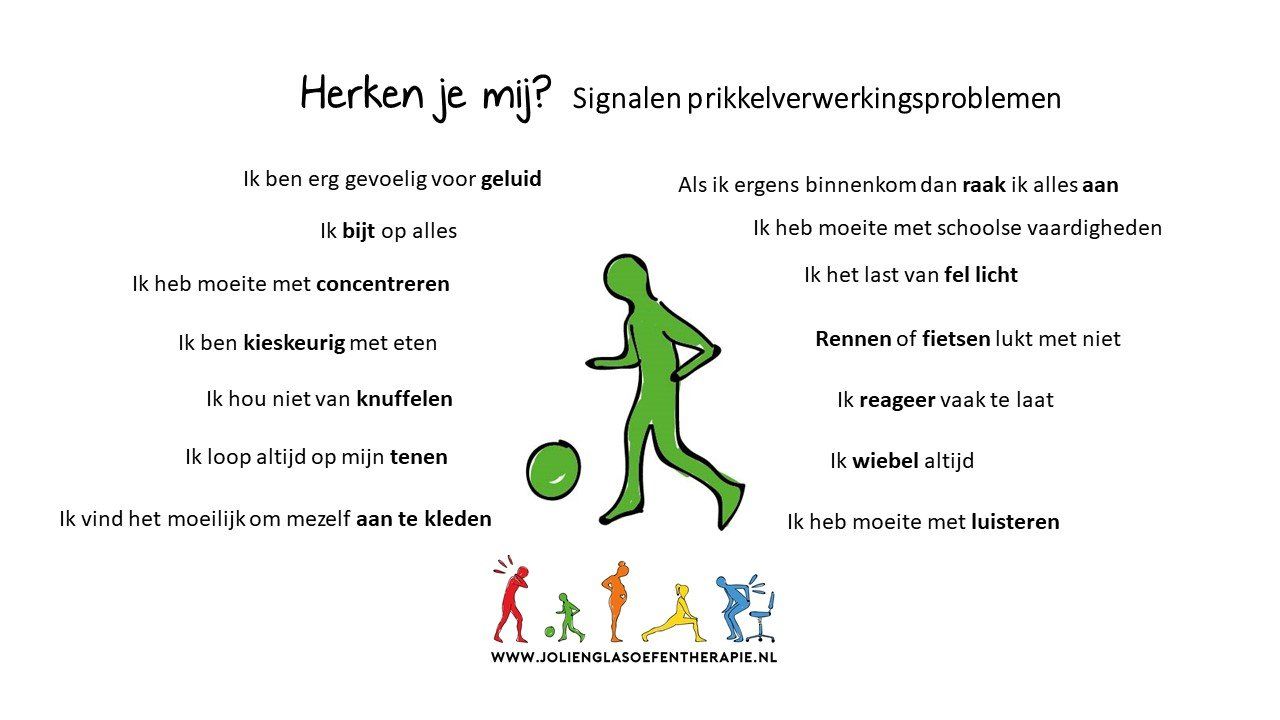
Do you recognize this?:
-Motion restlessness
-Difficulty with self-regulation
-Crying easily, angry or more anxious than normal
-Headache, stomach ache or muscle tension
-Sleep problems
-Withdrawal
-Sensory sensitivity
-Moderate/complaining work attitude
The cause of this may be that the stimuli (information from our senses (eyes, ears, touch, balance, etc.) are not processed properly, which results in a different reaction/behavior than expected.
Sensory processing is a crucial part of children's mental, physical, and emotional development. My mission is to help parents recognize their children's signals and regulate their nervous systems for optimal growth.
What do you see (literally!)?
-Muscle tension or tension in the body?
-Passive behavior by withdrawing to your own room/place/away from the hustle and bustle?
-Noticeably busy behavior?
Noticeably quiet/avoidant behavior?
Understimulated behavior in children can be recognized by various characteristics:
- The child is fluttering through life, literally and figuratively.
- It regularly goes off into its own world.
- Unexplained bursts of joy or energy occur.
- It discovers a thousand and one things, but rarely in a straight line.
When understimulated you see a kind of off state, it seems difficult to turn on. - The child appears to bounce like a ping-pong ball through space.
- It is sometimes unreachable and does not seem to respond to your calls.
- Every now and then there is an explosion of emotion.
- It goes from one adventure to another without ever getting exhausted.
- When overstimulated, the child may sometimes seem lost in a dream world for a moment before emerging back into the real world.
On the other hand, there are also signs of overstimulated behavior:
SI research, treatment and advice
If we suspect your child's sensory processing is disrupted, we can investigate this. I'll conduct a comprehensive interview with you and your child and perform a movement assessment with tests. For this, I use, among other things, the SP questionnaire , It Movement ABC 2 and the Beery VMI.
Based on the research results, I will formulate a recommendation. This approach can be applied to, for example, a Grip on Growth or school.
Stimulus processing and sleep
Children who have sensory processing problems often also have trouble sleeping. When their system is still busy processing the day's events, it's very difficult to lie down and relax. As a sleep coach, I can guide you and them in this. We'll start by working on the sensory processing itself. Then we can see how things are going with the rest of the day.
sleep behavior is.
The Dutch Founding for Sensory Information Processing
The NSSI is a platform for sharing knowledge and information about sensory processing (SIP). Not everyone is familiar with the concept of SIP and the potential consequences of experiencing problems with it. This website offers a wealth of information related to SIP. I joined to gain information, and especially to learn and share about SIP.
You can register using the registration form at the top of this page. Or send us your questions by email: Info@Jolienglasoefentherapie.nl or call or whatsapp to 0612660152 for more information.
Below are examples of SI problems:
-Some children with auditory processing problems will seek out sounds to activate themselves.
-Children who are sensitive to sound may also start making sounds themselves to drown out the noise present.
-Some children constantly seek out additional tactile stimuli, for example by touching others or fiddling with something.
-Deep pressure (for example with aweighted cuddly toy, pressure vest) has a calming effect via the sense of touch.
-Children who are hypersensitive to odors can smell things that others do not perceive.
Hypersensitivity in the mouth may also occur. This can affect tastes, smells, and textures.
-Some children with sensory processing problems do not like having different textures in their mouths at the same time.
Other children are constantly seeking extra stimulation in their mouths. They chew on items like pencils, string, and collars.
For more information, please call
0612660152. Or email to
Info@jolienglasoefentherapie.nl.